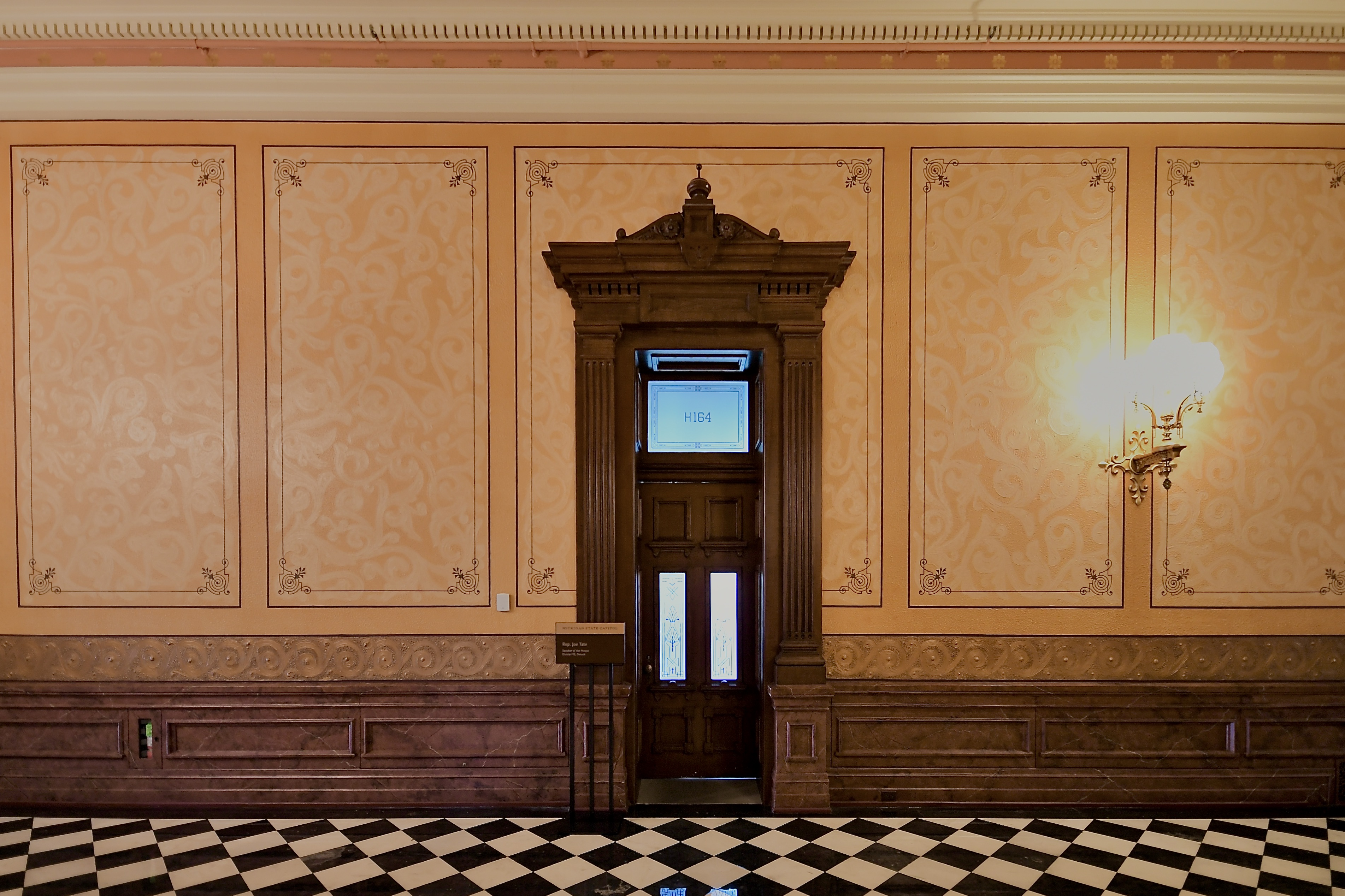
One of the most striking aspects of the Capitol’s first floor corridors is the expanse of decorative artwork that adorns them – a marked transition from the unadorned walls of the ground floor, where visitors enter the building. Prior to 1989, the north and south corridors of the first floor were also home to four large murals.
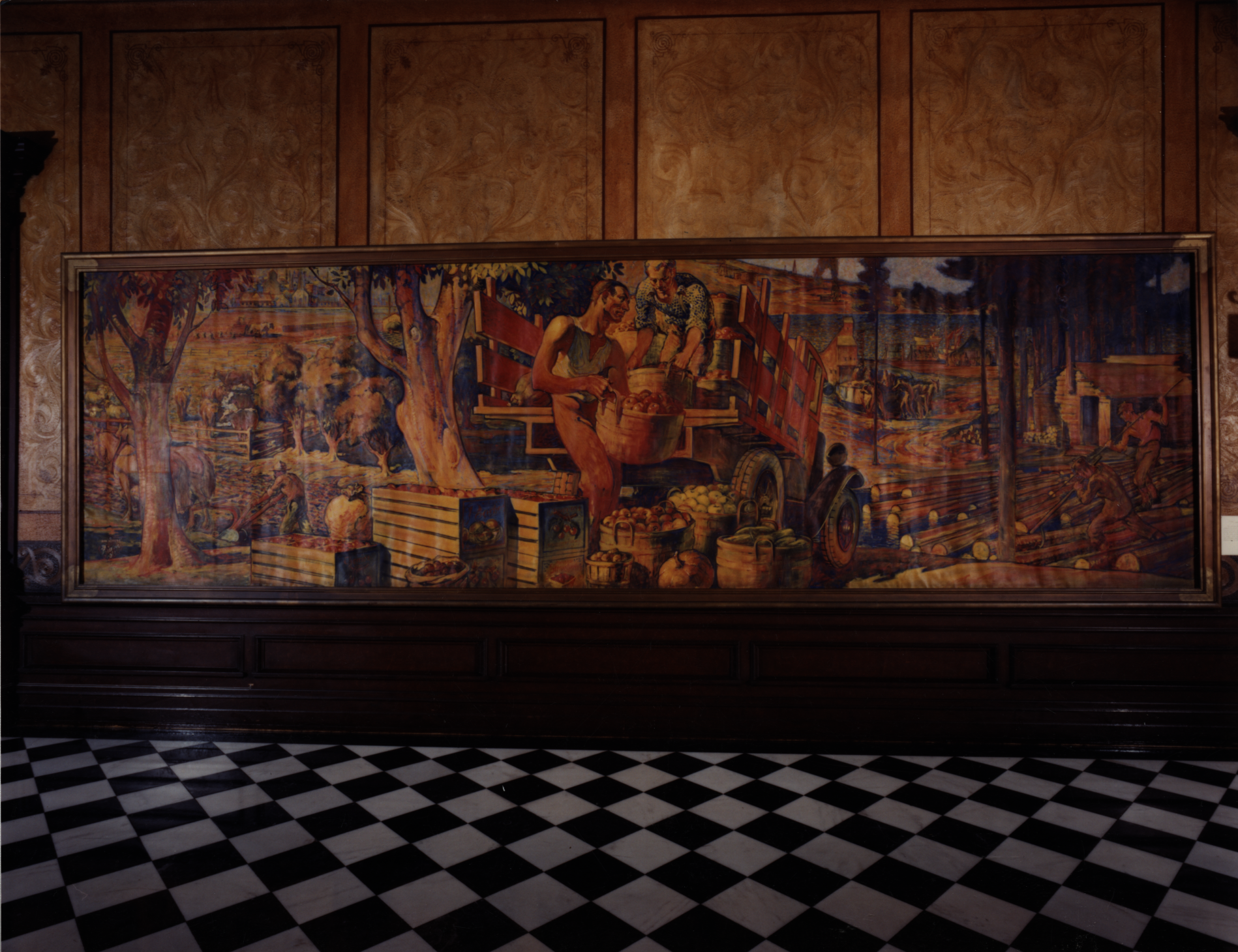
These murals were originally created for display at the 1933 Century of Progress Exposition in Chicago, a world’s fair celebrating the city’s centennial. The event aimed to highlight achievements of America and the world, and it allowed each state to show off its advancements and strengths.
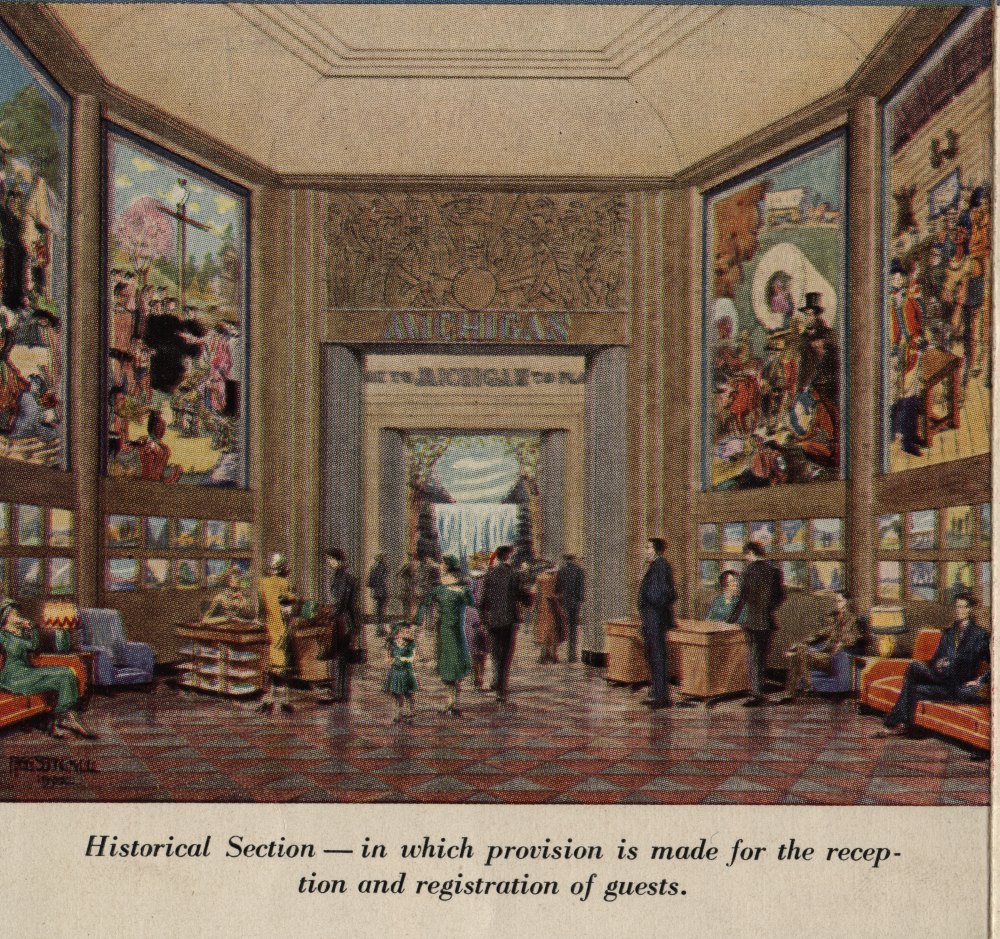
As part of Michigan’s exhibit, eight large murals were commissioned to highlight the state’s history, natural resources, and industry. The figural scenes were to be painted by eight of the state’s best artists. It was encouraged that they use similar color palettes, so as to make the murals better compliment each other.
The murals included the following:
· “The Arrival of Jean Nicolet in Michigan in 1634” by Zoltan Sepeshy
· “Father Marquette and His Mission at St. Ignace” by Vivan Browne Boron
· “The Pageant of Saint Lusson” by Hunter Griffith
· “Michigan’s Industries” by Reginald O. Bennett
· “Michigan’s Natural Resources” by Paul Honoré
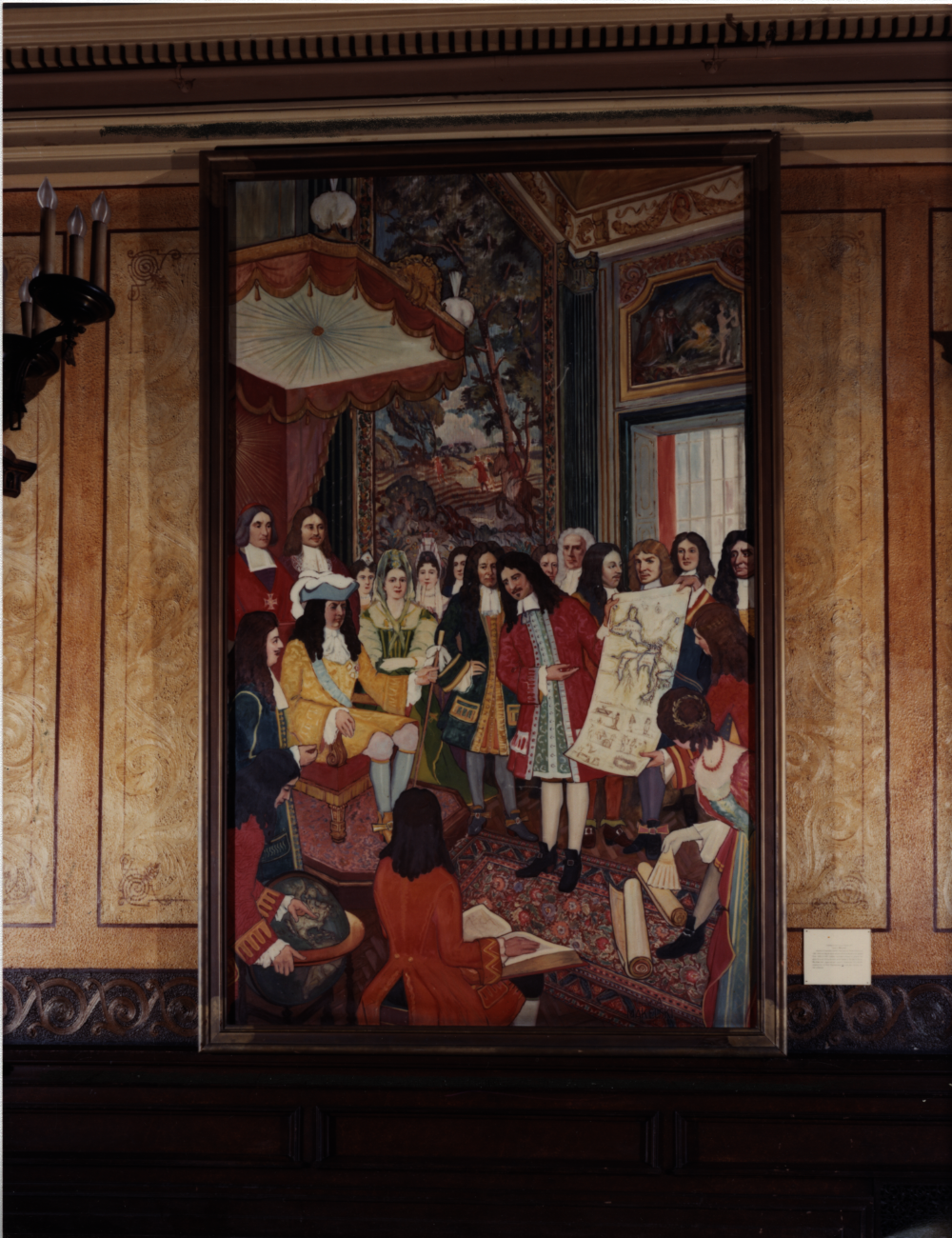
· “Cadillac at the Court of Louis XIV” by Leon A. Makielski
· “Gladwin and Pontiac” by Walter Speck
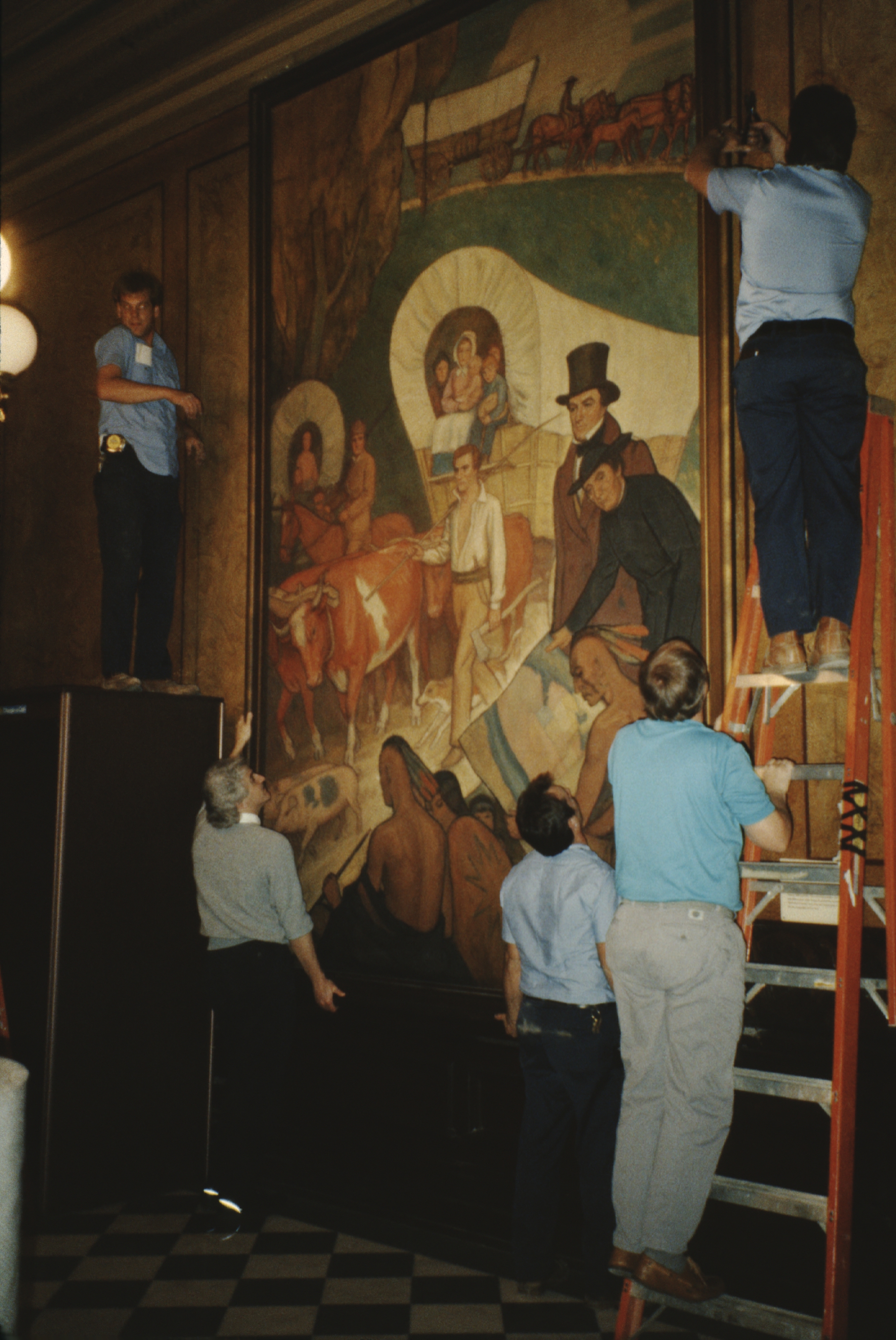
· “Pioneers Along the Detroit-Chicago Road” by Roy C. Gamble
Stylistically speaking, these paintings share many features in common with WPA style artwork. The Works Progress Administration commissioned countless works during the Great Depression through its Federal Art Project. WPA style figural artwork often focuses on hard work, industry, and technological advancement. It also tends to have a two-dimensional, flat quality to it, often reinforced through the use of thick outlines and singular color fields.
Murals and other large, public artworks were among the most popular WPA commissions; the eight murals created for the Exposition, however, do not qualify as WPA artwork themselves due to the fact that they were funded by the State of Michigan rather than the federal WPA project.
After the Exposition ended, several of the paintings went on exhibit – first in Detroit, and then as part of a historical fair on Mackinac Island. But by the spring of 1935, they had ended up in storage and at risk of deteriorating. Following discussions by the Legislature, four of the murals were installed in the Capitol: “Father Marquette and His Mission at St. Ignace” by Boron, “Michigan’s Natural Resources” by Honoré, “Cadillac at the Court of Louis XIV” by Makielski,and “Pioneers Along the Detroit-Chicago Road” by Gamble. The locations of the other four murals was, at the time, a mystery – though in 1964 “Michigan Industries” by Bennett surfaced in Detroit amongst a pile of old signs being moved by Michigan State Fairgrounds staff. To this day, three of the murals remain unaccounted for.
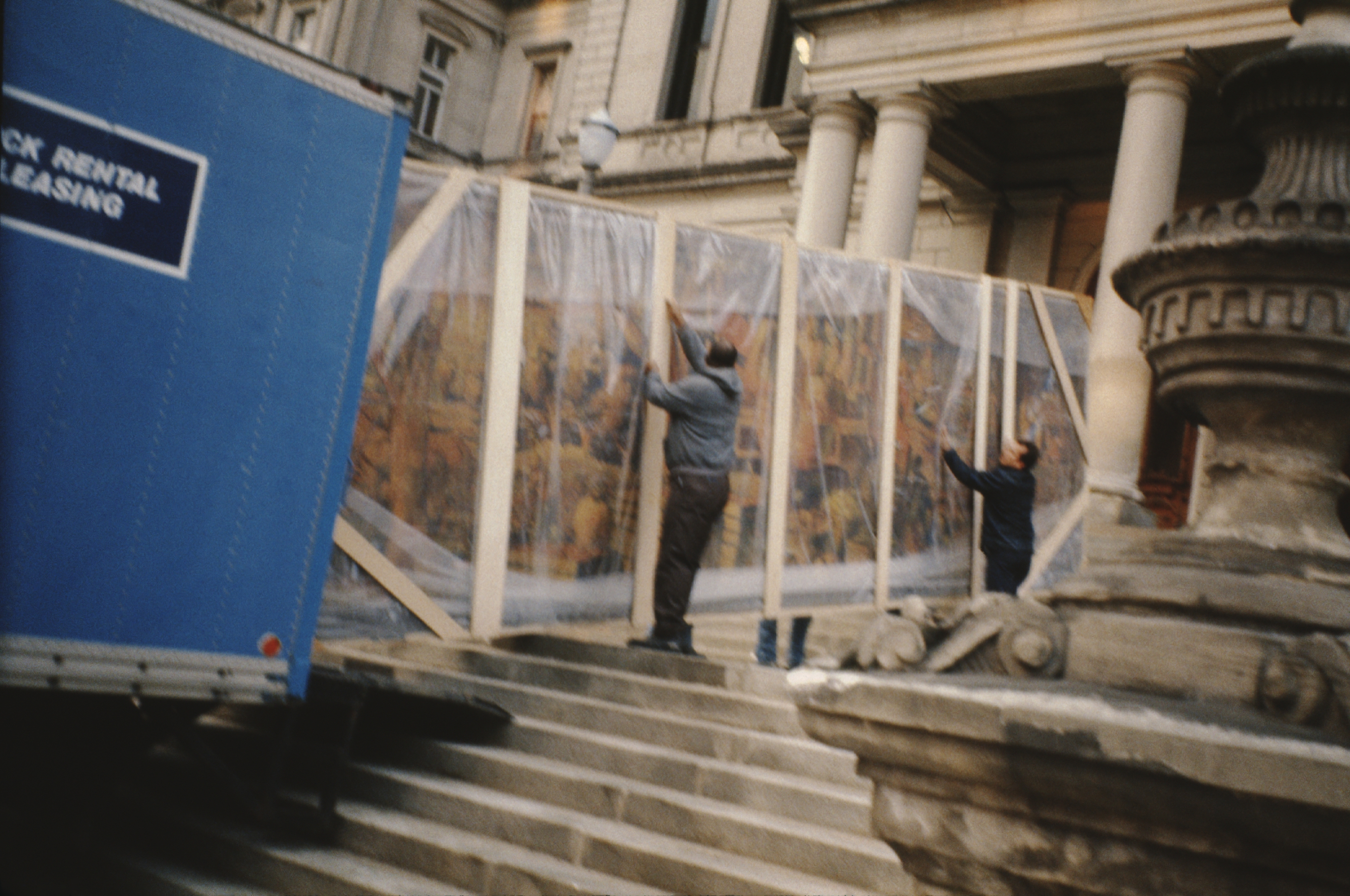
During the 1987-1992 restoration of the Capitol, which aimed to restore the building to its original Victorian style, it was decided that the 1930’s paintings no longer fit the first floor corridors. In 1989, the murals were removed from the Capitol’s walls. Those by Gamble and Honoré were put on display at the Michigan Historical Museum, the one by Makielski was relocated to the Detroit Historical Museum, and the painting by Boron is now on exhibit at the River of History Museums in Sault Ste. Marie.