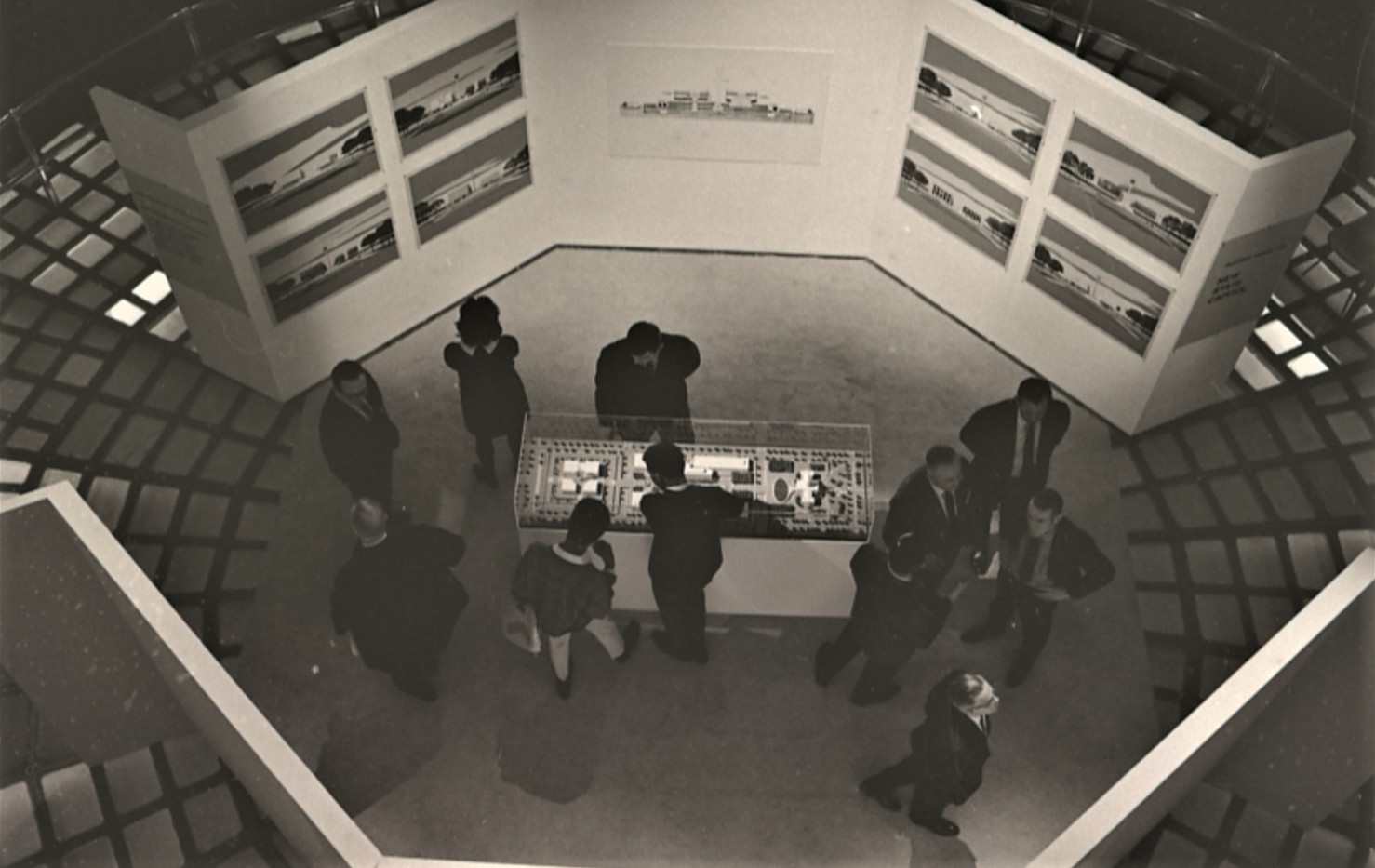
On March 5, 1969, the official designs for a replacement Capitol were unveiled on the glass floor of the rotunda. The proposed structure was intended to become Michigan’s fourth Capitol building - the third to stand in Lansing.
The late 1960s movement to construct a new Capitol was nearly a century in the making. Although originally designed to house all three branches of state government, industrial expansion, technological advancement, and Michigan’s rapidly growing population quickly pushed our third Capitol beyond its intended capacity.
By the 1910s, state officials and lawmakers were already searching for additional workspace. Proposals ranged from constructing new office buildings and renting space downtown to expanding the Capitol itself. Some wanted to extend the west wing as far as Walnut Street, build additions to the north and south wings, or even construct an additional floor across the entire Senate Chamber.
The first formal proposal for an entirely new Capitol building came in 1922, when Lansing hired renowned city planner Harland Bartholomew of St. Louis, Missouri. In his city plans of both 1922 and 1937, Bartholomew envisioned transforming the blocks west of the Capitol into a coordinated district for state government expansion. His proposal called for redeveloping the surrounding residential neighborhood into a complex of state office buildings, culminating at its western edge with a new, larger fourth Capitol.
By the mid-1960s, portions of this vision were beginning to take shape. The blocks immediately west of the Capitol were giving rise to four large office buildings, and plans were underway to continue development farther west. During this period, a committee was formed to study the cost and potential designs for a new Capitol building.
In 1968, the committee accepted twenty-five design proposals. Ranging from towering skyscrapers to massive cubes and even inverted pyramids, the submissions shared a distinctly modern, Atomic Age architectural vision.
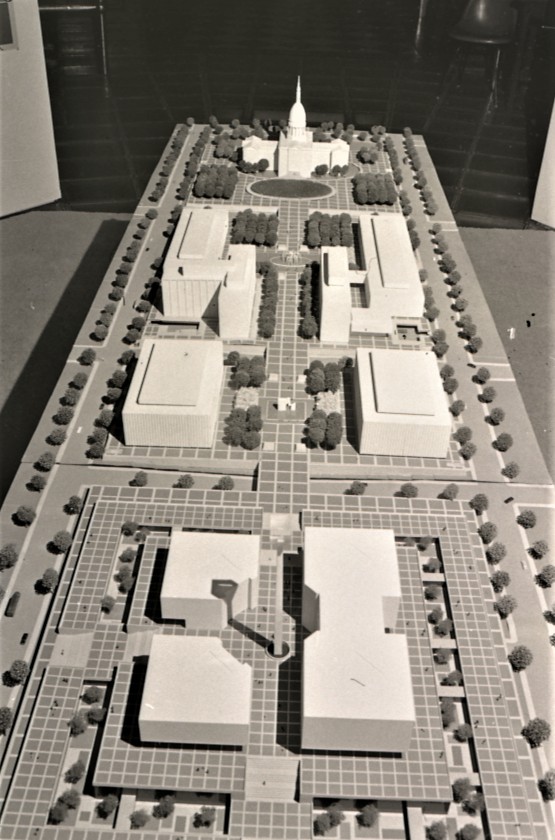
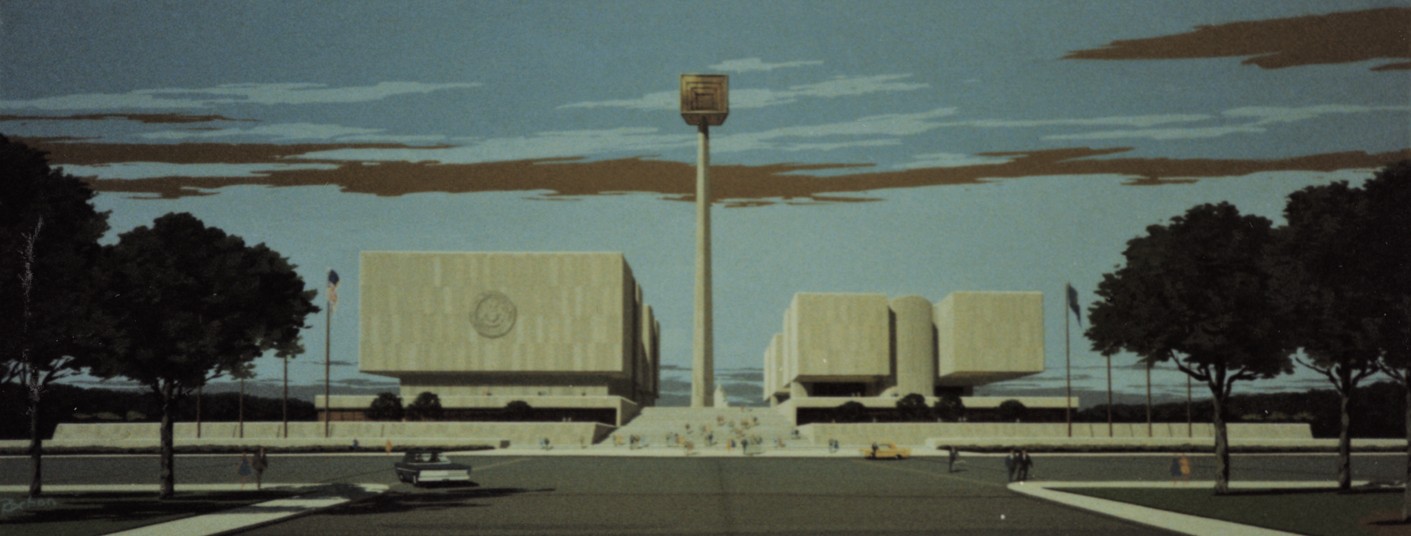
In January 1969, the final design was selected: three large cubic structures - one representing each branch of government - set atop a raised office plaza above an underground parking garage. The proposed fourth Capitol site lay between Pine Street and present-day Martin Luther King Jr. Boulevard (then Logan Street), on land now occupied by parking lots adjacent to the Hannah and Ottawa State Office Buildings.
Initial public reaction to the design was largely negative. In response, many Michiganders began expressing a renewed appreciation for the aging Capitol, particularly its iconic dome. Historically minded organizations and preservation advocates called for the cleaning and restoration of the existing building rather than its replacement. Capitol caretakers and staff emphasized the architectural and historical significance of the structure, warning that its loss would erase an important piece of Michigan’s heritage.
At the same time, both members of the public and a majority of lawmakers criticized the proposed designs as overly brutalist - bland, imposing, and cold in appearance - standing in stark contrast to the warmth and ornamentation of our nineteenth-century Capitol.
A detailed 3D model of the proposed Capitol, unveiled in early March 1969 as an exhibit on the glass floor of the existing Capitol’s rotunda, did nothing to sway opinions, and when combined with an escalating projected cost of $80–120 million, support for the project steadily faded. By the mid-1970s, the plan for a new Capitol had all but disappeared, surviving only as a brief and largely forgotten chapter in Capitol history.
Still, it’s fascinating to consider what almost was - and how close Michigan came to replacing one of its most recognizable landmarks.
-Brian W. Page, Capitol Registrar & Web Coordinator